The most common reason sermorelin appears not to work is wrong injection timing, not a bad compound or inadequate pituitary function. Injecting in the morning instead of at bedtime can reduce IGF-1 response by more than half.
Most sermorelin protocols that produce disappointing results fail for avoidable reasons. The compound is correct, the dose is in range, and the pituitary is capable of responding. The failure is in execution: wrong timing, wrong fasting state, wrong injection depth, or wrong interpretation of early results. This guide covers the eight most common protocol mistakes and how to correct them.
Mistake 1: Injecting at the Wrong Time of Day
Patients who inject sermorelin in the morning or at noon are treating it like a vitamin supplement. Sermorelin is not one. The pituitary responds to GHRH stimulation throughout the day, but the GH pulse it produces in the 60 to 90 minutes after falling asleep is 3 to 5 times larger than any daytime pulse. Morning injection produces a GH response that competes with the insulin from breakfast and misses the slow-wave sleep amplification window. The practical result is a significantly weaker IGF-1 response than bedtime dosing produces.
Inject within 30 minutes of your planned sleep time. If your schedule is irregular, the consistency of the injection-to-sleep window matters more than the absolute clock time.
Mistake 2: Eating Too Close to the Injection
Eating dinner and immediately injecting sermorelin negates part of its effect. Elevated postprandial insulin blocks GH secretion at the pituitary level. The degree of blunting depends on the meal size and carbohydrate load. Patients who eat a full meal and inject within 60 minutes are running a protocol at half-efficiency. The fix is mechanical: set a dinner cutoff 2 hours before your planned injection time and treat it as a hard rule rather than a preference.
Reading "Mistake 2: Eating Too Close to the Injection" and acting on it are two different things. SystemLabs builds its protocol on baseline IGF-1 levels before it prescribes, then formulates dose on clinical indication, at $179 a month.
Mistake 3: Injecting Intramuscularly Instead of Subcutaneously
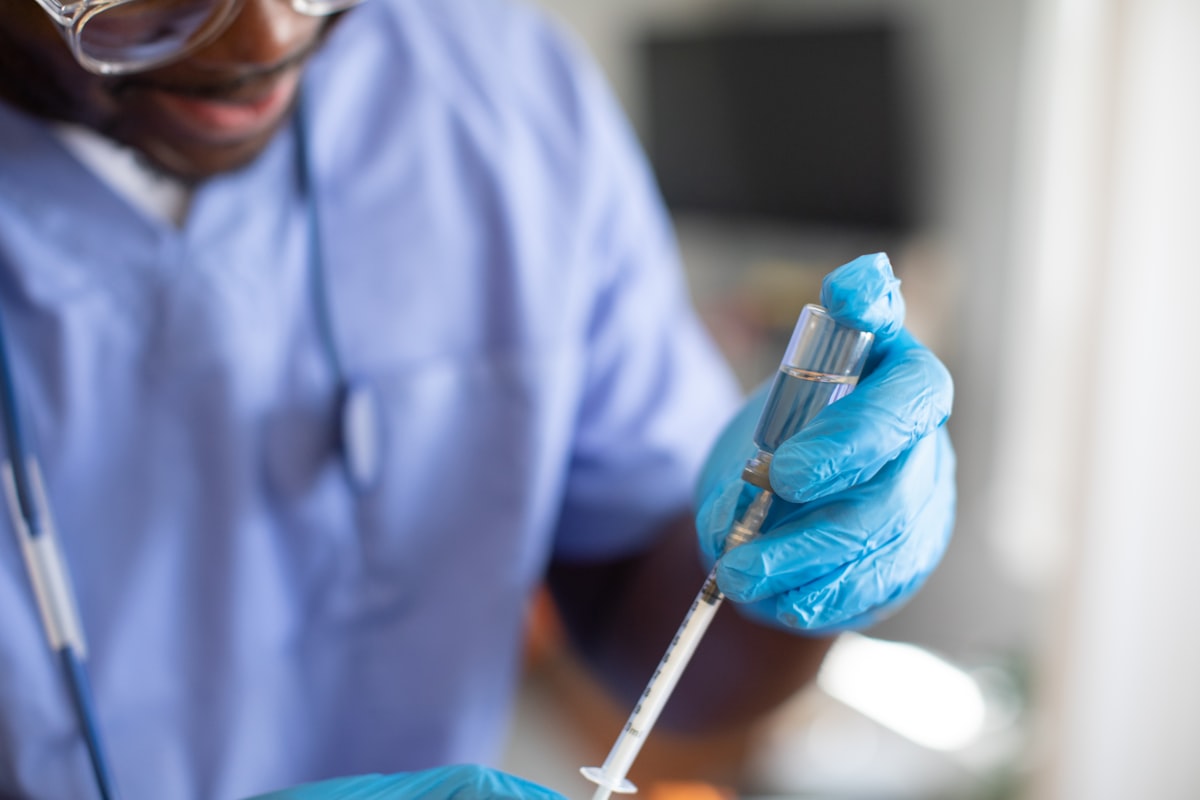
Most patients who inject intramuscularly are not making a conscious choice; they are using the wrong needle. A 1-inch (25 mm) needle inserted straight into the abdomen goes into muscle in most people. A 5/16-inch (8 mm) needle at a 45-degree angle goes into subcutaneous fat. The medication is the same; the needle length and insertion angle determine where it lands. Patients who report significant injection pain or bruising are almost always injecting too deep.
- Use a 28 to 31 gauge needle, 4 to 8 mm length
- Pinch the skin at the injection site before inserting the needle
- Insert at a 45-degree angle, not perpendicular
- If you feel significant resistance or pain, you may be in muscle. Switch to a shorter needle
Mistake 4: Not Getting the 90-Day IGF-1 Retest
The 90-day IGF-1 retest is the primary clinical tool for confirming that the dose is producing a response and that IGF-1 has risen into the therapeutic range. Patients who skip this test have no objective basis for knowing whether the protocol is working. They are also unable to catch IGF-1 levels that have exceeded the upper reference limit, which warrants a dose reduction. Running a protocol for 6 months without a 90-day retest means the dose may be wrong for the entire duration.
Mistake 5: Stopping After Early Sleep Improvement
Subjective sleep improvements from sermorelin were not confirmed in primary controlled trials (Khorram et al. 1997 reported "sleep quality was unaffected"). The clinical outcomes GHRH-analog trials have shown are IGF-1 elevation within 2 weeks (Khorram 1997) and visceral fat reduction over a 6-month protocol (Stanley 2015, tesamorelin). Patients who stop after a few weeks based on subjective changes alone may discontinue before the literature-supported outcomes develop.
Mistake 6: Incorrect Reconstitution or Storage
Reconstituted sermorelin that has been shaken vigorously, frozen, left at room temperature for extended periods, or used past the beyond-use date may be degraded or contaminated. Peptide bonds are fragile. Even a correctly compounded, potency-tested batch becomes ineffective or potentially unsafe if handled incorrectly after delivery. This is one of the more common but least discussed reasons for apparent non-response.
- Do not shake the vial to dissolve the powder. Swirl gently
- Refrigerate the reconstituted solution immediately; do not leave it at room temperature
- Do not freeze the reconstituted solution
- Mark the vial with the reconstitution date and discard after 20 to 30 days
- Inspect the solution before each injection; discard if cloudy or contains particles
Mistake 7: Expecting Results Like Synthetic HGH or GLP-1 Drugs
Sermorelin restores the GH axis gradually over 3 to 6 months. It does not produce the acute, significant changes that synthetic HGH at therapeutic doses produces, nor the rapid weight loss that GLP-1 drugs produce. Patients who start sermorelin expecting dramatic changes within 4 to 6 weeks are applying the wrong benchmark. The correct benchmark is: improved sleep by week 4, improved energy and recovery by month 3, measurable body composition shift by month 6. These are realistic and achievable outcomes for the right patient.
Mistake 8: Starting Without a Baseline IGF-1
Without a baseline IGF-1 reading, there is no way to confirm clinical indication before starting or to measure whether the protocol has produced a response at 90 days. Patients who start sermorelin without a baseline are running a protocol with no measurable start point. If symptoms do not improve, they cannot determine whether the protocol produced no IGF-1 response, whether it produced a response but the symptoms have another cause, or whether the symptoms improved from a sub-clinical baseline that was never tested.
Bottom Line
The majority of sermorelin non-response cases are protocol execution errors, not pharmacologic failures. Wrong injection timing, eating before injecting, incorrect injection depth, and skipping the 90-day retest account for most disappointing results. Correcting these before concluding the compound is ineffective or increasing the dose is the right clinical sequence.
Most protocol errors come down to dosing without a starting IGF-1 to measure against. SystemLabs tests IGF-1 before prescribing and formulates sermorelin on clinical indication, so the protocol is built from your labs and retested rather than guessed.
Frequently Asked Questions
Can I inject sermorelin in the morning instead of at bedtime?
Injecting in the morning significantly reduces clinical effectiveness. The GH pulse that sermorelin amplifies occurs during slow-wave sleep, 60 to 90 minutes after falling asleep. Morning injection produces a GH response that competes with postprandial insulin and misses the sleep-phase amplification window. Many non-responders who switch from morning to bedtime injection see IGF-1 improvements at the next 90-day draw without any dose change.
What if I eat dinner within 1 hour of my sermorelin injection?
Eating within 1 to 2 hours of injecting reduces effectiveness. Elevated postprandial insulin, particularly from carbohydrate-rich meals, blunts pituitary GH secretion in response to GHRH stimulation. A 2-hour fasting window before injection is the standard clinical recommendation. If your schedule makes a 2-hour fast difficult, a smaller, lower-carbohydrate dinner consumed 90 minutes before injection is preferable to eating a full meal immediately before injecting.
How do I know if I am injecting subcutaneously and not intramuscularly?
Subcutaneous injection goes into the fat layer just beneath the skin. For most adults, this requires a 4 to 8 mm needle at a 45-degree angle with a gentle skin pinch. If you are using a needle longer than 8 mm at 90 degrees without a skin pinch, you are likely reaching the muscle layer, particularly in leaner individuals. Subcutaneous injection feels like pressure under the skin; intramuscular injection feels deeper and may produce more soreness afterward.
What does it mean if my reconstituted sermorelin solution is cloudy?
A cloudy sermorelin solution should not be injected. Clear, colorless solution is correct. Cloudiness indicates either degradation from shaking, temperature exposure, or age past the discard date, or contamination, or incorrect reconstitution. Discard the vial and contact the prescribing pharmacy. Do not attempt to inject a cloudy solution hoping it improves.
How do I know if my sermorelin protocol is working?
The 90-day IGF-1 retest is the objective measure. A protocol working correctly should produce a rise in IGF-1 of 40 to 80 ng/mL above baseline, with the result landing in the upper half of the age-adjusted reference range. Symptom improvement alone is not a reliable indicator because sleep improvement and energy changes can occur from other factors. The lab result is the definitive measure of whether the GH axis is responding to the protocol.
References
- Adaptation of the 24-h growth hormone profile to a state of sleep debt (postsleep onset GH pulse) American Journal of Physiology, 2000. https://journals.physiology.org/doi/full/10.1152/ajpregu.2000.279.3.R874
- Effect of Growth Hormone on Insulin Signaling (GH-insulin antagonism) Molecular and Cellular Endocrinology, 2020. PMC7606590. https://pmc.ncbi.nlm.nih.gov/articles/PMC7606590/
- Endocrine effects of GHRH-(1-29)-NH2 (90-day IGF-1 assessment in elderly trial) JCEM, 1997. PMID: 9141536. https://pubmed.ncbi.nlm.nih.gov/9141536/
- Geref Prescribing Information (storage and reconstitution) RxList, 2008. https://www.rxlist.com/sermorelin-acetate-drug.htm
- Subcutaneous injection technique and needle sizing (4-6mm) Journal of Pharmacy Technology, 2015. PMC4647175. https://pmc.ncbi.nlm.nih.gov/articles/PMC4647175/